

 БГ
 EN
Institutions in favor of children with disabilities
27.05.2015 - 10:36
Stages of Planning and Implementing the Process of Bringing out Children from Specialized Institutions, Mechanisms for Inter-Institutional Cooperation. Network Development of Social Services
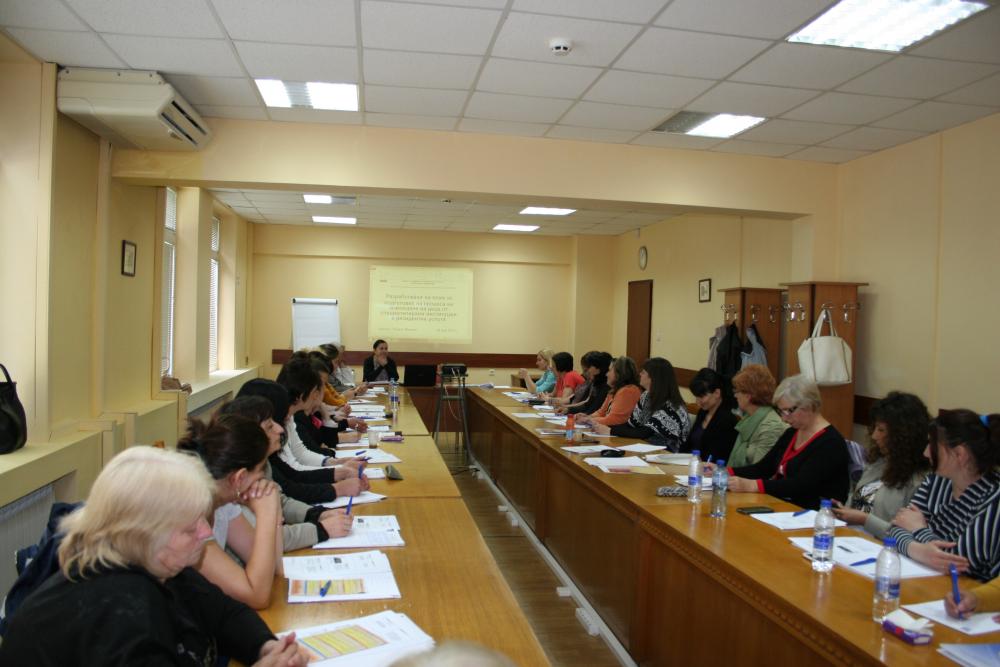
How to implement legislative measures, how to interact fully with institutions when disabled children need to be brought out from specialized institutions and accommodated in residential services, how to make this a professional and efficient process and what is the role of a social worker - these are some of the questions posed by the organized by CHRDRI training.
Its topic is „Stages of Planning and Implementing the Process of Bringing out Children from Specialized Institutions, Mechanisms for Inter-Institutional Cooperation. Network Development of Social Services".
The training started its work on May 27, 2015 and will take place within 2 days. Its main purpose is to acquaint the participants with the necessary information and tools for bringing children with disabilities out of institutional care and their placement in residential care services, as well as building skills for planning the process. During the training will be presented practices for sharing experience and providing adequate support necessary in work with children. Furthermore, during the training will be build skills for interaction with representatives of various institutions involved in the process and for providing an integrated approach of work.
The focus of the program on the second day is the role of a social worker in the process of bringing children with disabilities out of specialized institutions, since their training is crucial for the realization of a peaceful transition of a child from the institution, in which it was resident, to the new place, as well as for its easy and painless adaptation.
To participate in the seminar are invited employees from Social Assistance Regional Directorates and social workers from the "Child Protection" departments to the Social Protection Directorates of SAA, experts from the State Agency for Child Protection, NGOs, and representatives of local administration and social services that are decentralized and managed by local authorities.
As a result of their training, the participants will be able to optimize their planning and implementation of the process of bringing out children, will gain adequate knowledge and experience on the principles and methods of cooperation and partnership, and will be able to monitor and support children moved into new services.
The methodology of the course is practically focused and provides numerous discussions, case studies and development of practical tasks according to the principles and standards of CHRDRI adult education.


