

 БГ
БГ EN
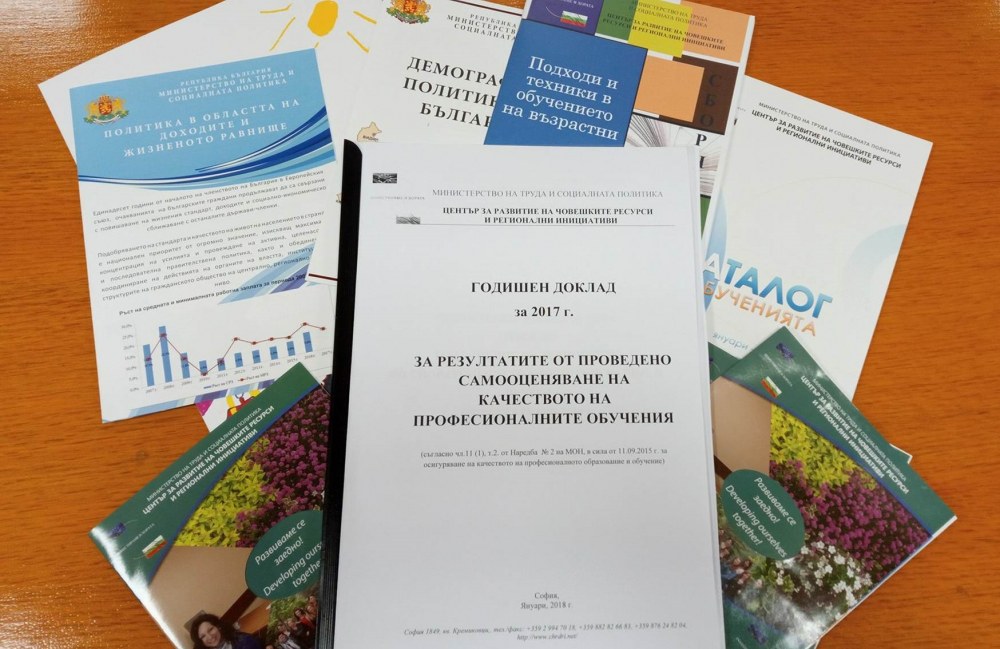
ENGOOD RESULTS FROM THE SELF-EVALUATION OF THE QUALITY OF THE VOCATIONAL TRAININGS, CONDUCTED IN 2017
07.02.2018 - 12:57
For a second consecutive year, the CHRDRI carried out a self-evaluation of the quality of the vocational trainings. This practice was introduced by Regulation No 2 of the Ministry of Education and Science on the Quality Assurance of Vocational Education and Training since the beginning of 2016.
The conclusion of the self-evaluation for 2017 shows good results due to the long-standing affirmation of the Centre as an accredited organization on the market for training services, teaching both public administration employees on social thematic and unemployed people on the labour market's most preferred professions.
During the monitored period, two new courses for unemployed persons were conducted. They were on some of the most demanded specialties at the moment - "Guide Service" and "Small and Medium Business". These programs have been fully updated in relation to the legal basis for the framework programs, approved by order of the Minister of Education and Science on 17.03.2017.
The development of the Center's digital products continued. There were six discussions held in the Lecturer's Club, and 12 vocational trainings for state administration of the Social Assistance Agency (SAA) and the Employment Agency (EA) took place on the Distance Learning Platform. A "Project SEECP" button is added to the site of the CHRDRI. The site is updated daily with information. In a convenient sub-menu all the information about the Center's activities in implementation of the project: "Addressing Demographic Challenges in the Countries participating in the South East European Cooperation Process" is organized.
The evaluation showed that in 2018 it is necessary to pay more specific attention to expanding contacts with employers' organizations, as well as to integrate the digital product SmartNet more fully into the training programs, in order to achieve effective pre-information of the participants and wider innovation in the learning process.
The team of the Centre will continue the active work on updating the curriculum content of the training programs as well as to systematically adapt the vocational programs in full compliance with the NAVET requirements. The vocational programs portfolio of the Centre is going to be expanded with currently needed on the labour market professions. Moreover, courses on gaining key competences for unemployed persons will be organized, such as "Conflict and Crisis Management" under KC6 and "Leadership Skills" under KC7.


